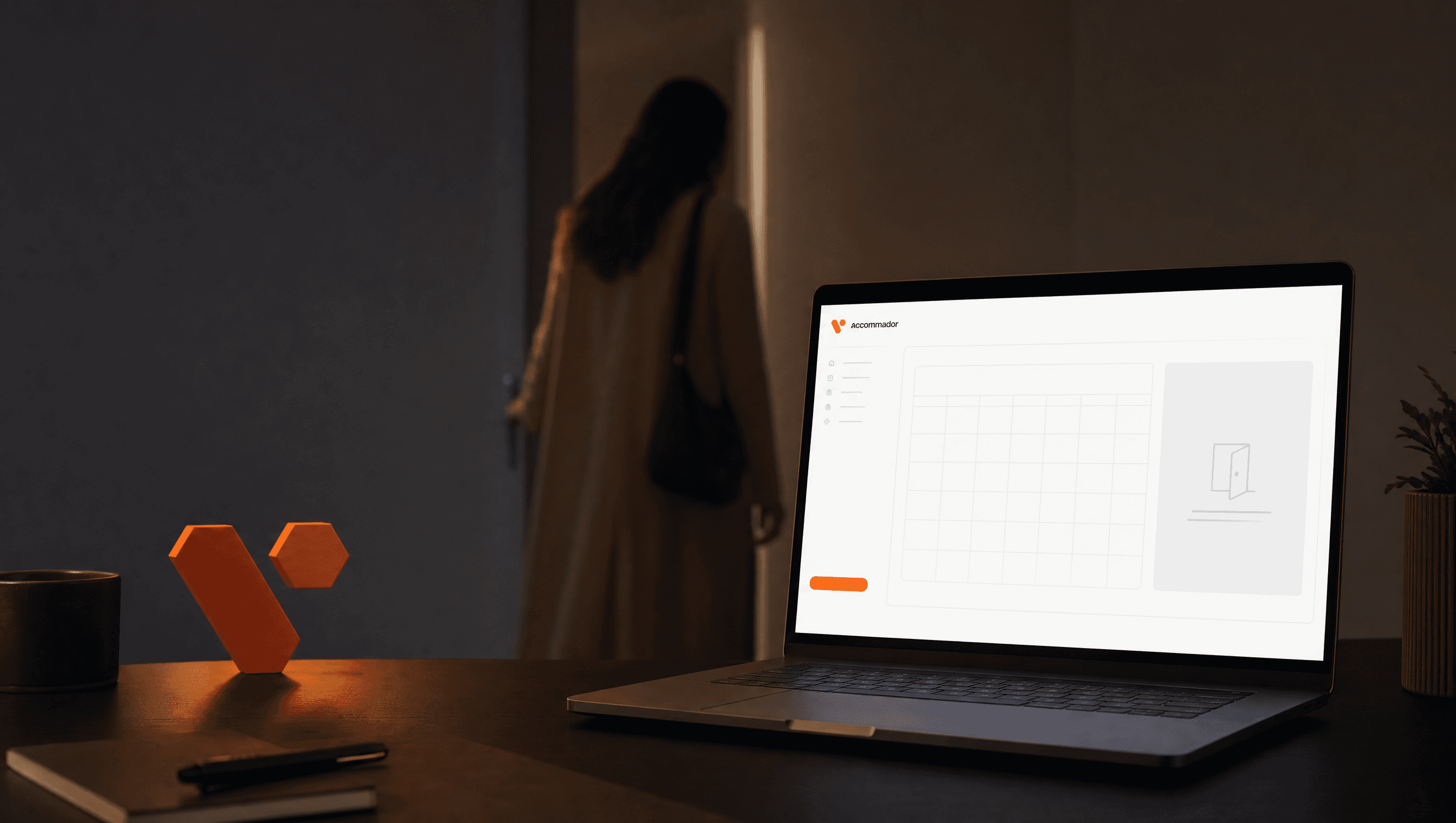
A guest lands on your beautiful, on-brand site, scrolls the rooms, picks dates, clicks Book Now — and somewhere between that click and a paid confirmation, they vanish. Then they reappear on Booking.com and book the exact same room. You never see them leave. You just see the commission invoice.
Booking.com isn't winning because its photos are better. It's winning because it has spent billions removing friction from a single moment: the gap between “I want this room” and “I've paid.” Most independent operators lose at that exact moment, on their own site, without ever seeing it happen.
If your direct site converts worse than the OTAs, the cause is almost never your pictures or your price. It's structural. Here's how to diagnose each leak — and fix it.
First, kill the photo myth
Operators reach for the obvious explanation. “Our images aren't as polished.” “Their price looks lower because of the way they display taxes.”
Both are usually false. Booking.com displays your photos — the same ones you uploaded. And on a like-for-like room, your direct rate is almost always equal or better, because you're not paying 15–18% commission out of it.
So if the product and the pictures are the same, the difference in conversion has to be coming from somewhere else. It is. It's the plumbing.
Leak 1: The multi-step booking flow
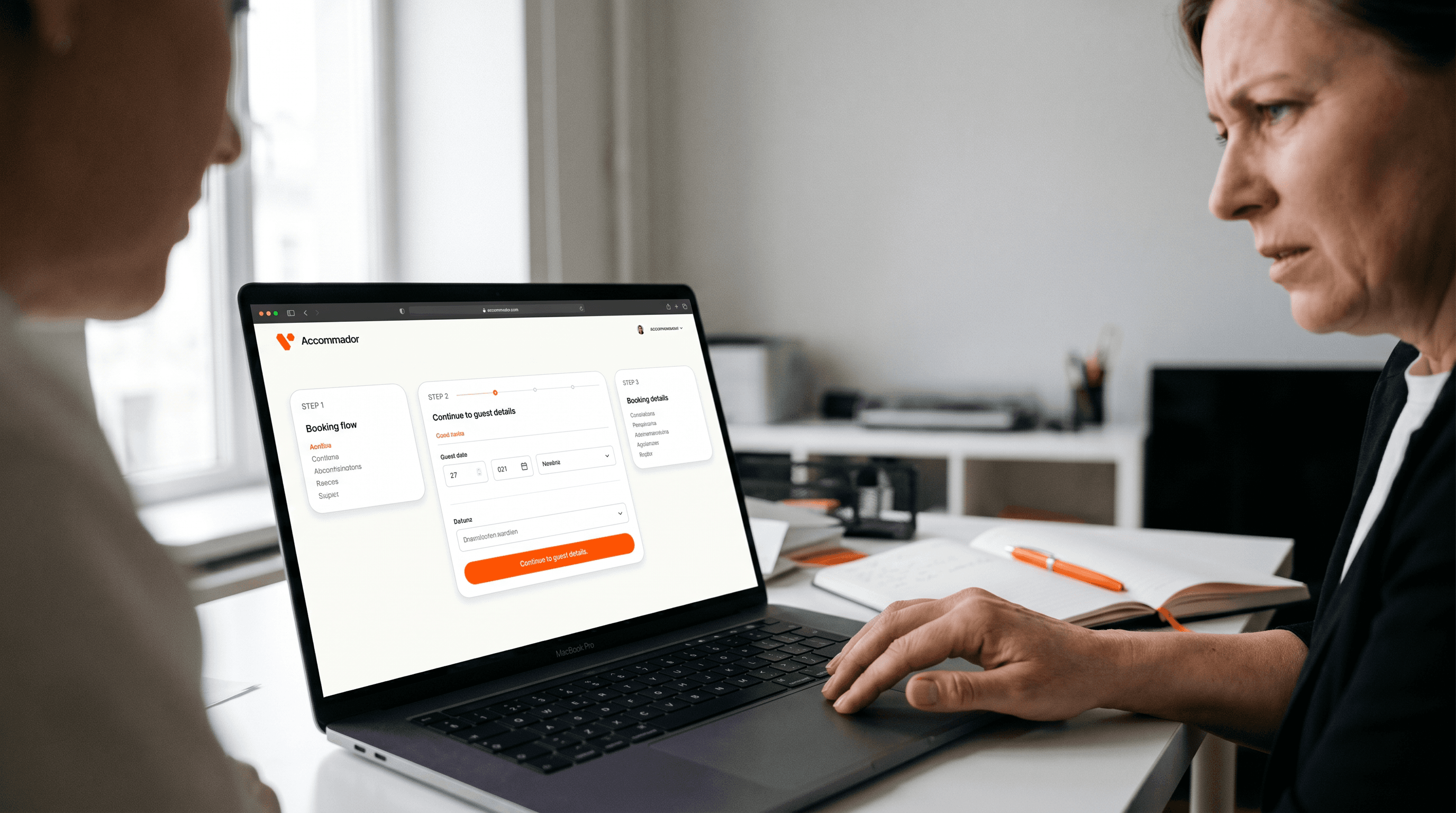
Count the clicks from your homepage to “payment confirmed” on your own site right now. If it's more than three or four screens — search, results, a separate room page, a redirect to a payment provider, a fresh form asking for details the guest already gave — you're bleeding bookings at every handover.
Booking.com's flow is brutally short. Every extra step you add is a moment for a busy person on a phone to think “I'll do this later,” and later never comes.
The fix: a single, continuous flow. Search, select, pay — no redirects to a different-looking page, no re-entering details. Accommador's branded booking engine runs the whole transaction in one place, so there's no handover point for the guest to fall out of.
Leak 2: The widget that screams “third-party”
This one is quiet but expensive. A guest browses your beautiful, on-brand site, clicks “Book Now,” and lands on a pop-up or page that uses a different font, a different colour, a different logo — clearly someone else's software.
The subconscious read is: “Am I still on the right website? Is this safe to put my card into?” That hesitation costs you the booking. The guest retreats to Booking.com not because it's cheaper, but because it feels safer.
The fix: a booking engine that wears your brand, not a vendor's — same domain, same colours, same logo, all the way to the payment screen. The headline is simple: if the booking step looks like a stranger built it, guests treat it like a stranger.
Leak 3: Slow mobile load
More than half of accommodation searches happen on a phone, often on patchy regional reception — exactly the Murray River, Margaret River and Snowy Mountains conditions your guests are booking from.
If your booking page takes five or six seconds to load on mobile data, a large share of guests are gone before they ever see a room. Booking.com is engineered to load fast on a weak connection. Many bolted-on booking widgets are not, because they load on top of an already-heavy website.
The fix: test your own booking flow on a phone, on mobile data, away from your office Wi-Fi. If it crawls, that's not a photo problem — it's a speed problem, and it's costing you bookings you never see.
Leak 4: No urgency, no social proof
Open any OTA listing and you'll see it: “Only 2 rooms left.” “Booked 14 times today.” “In high demand for your dates.” Plus a wall of reviews.
This isn't a trick. It's information that helps a hesitant person decide now instead of maybe. Most direct sites show a calendar and a price and nothing else — no scarcity, no reassurance, no nudge. So the guest stalls, and a stalled guest is a lost guest.
The fix: put honest urgency and social proof into the flow — genuine remaining availability, real review signals, real recent activity. You already have this data. Most direct booking engines just don't surface it.
Leak 5: The min-stay leak (the invisible one)
This is the killer almost nobody measures, and for operators with minimum-stay or fixed-arrival rules — houseboats, lodges, cabins, villas — it's usually the biggest leak of all.
Here's the mechanism. A guest searches a Friday-to-Sunday for a houseboat that has a 3-night minimum. Most booking engines do one thing: they return “no availability.”
Think about what that guest now believes. Not “I picked the wrong nights.” They believe you are sold out. So they leave — and they go straight to an OTA, search again, maybe adjust their dates, and book a competitor. You never see the search. You never see the lost booking. Your engine reported, correctly, that it returned no results, so nothing looks broken. The leak is completely invisible in your numbers.
That's why this one survives for years. You can't fix a leak you can't see, and a min-stay rejection looks identical to genuine sold-out availability in every report you have.
The fix: when a search misses your stay rule, don't dead-end it. Accommador's restricted-stay engine instead surfaces the 3 nearest bookable dates that do satisfy your minimum — turning a “no availability” bounce into a live, on-brand booking choice. The guest never has to leave to find dates that work. It's built into the platform, not a paid add-on, because a leak this invisible needs to be closed by default for everyone.
Add it up: the real conversion gap
None of these five leaks is about your property being worse than the listing on Booking.com. They're about the path to purchase being worse — and every one of them is fixable.
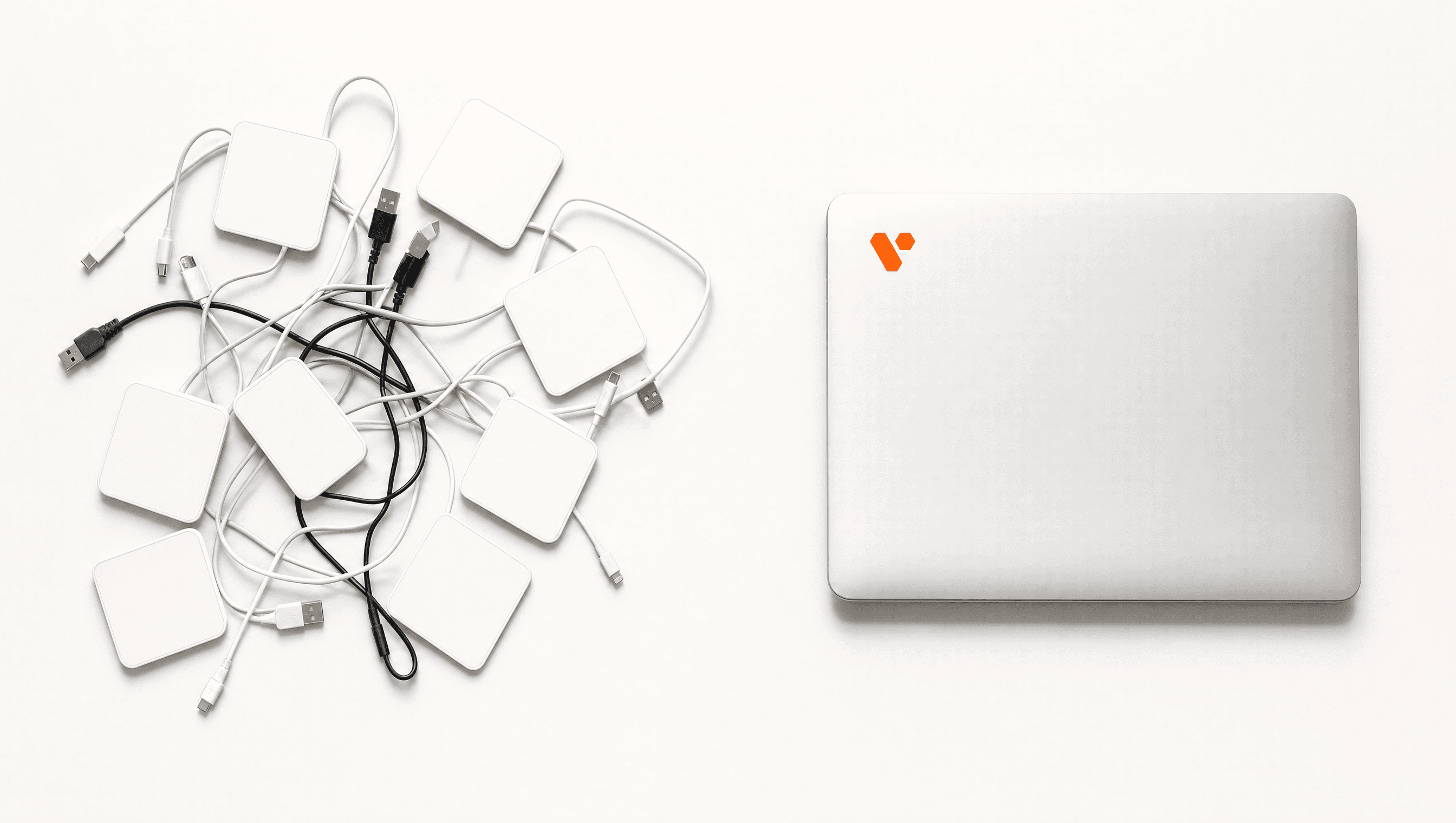
A typical 30-room operator stitching this together from separate tools is already running 6–9 products at well over $1,000/mo — a booking engine, a channel manager, email, reviews and more — and still leaking at the min-stay step, because almost none of those tools handle restricted-stay rules properly. Accommador puts the branded booking engine, the 100+ channel manager, the restricted-stay engine and the trust signals in one login, one bill.
You don't have to leave the OTAs to do it — you keep them as a channel. The point is to stop losing the guests who already came to your direct site. Every direct booking you recover keeps the 15–18% commission in your pocket instead of theirs.
The reason all five leaks are closed inside one platform — booking engine, OTA distribution, payments, trust signals and the restricted-stay engine in one place — is that the path to purchase only converts when every handover disappears. From $500 AUD/mo per location, everything included. Monthly billing, cancel anytime. Start free.